





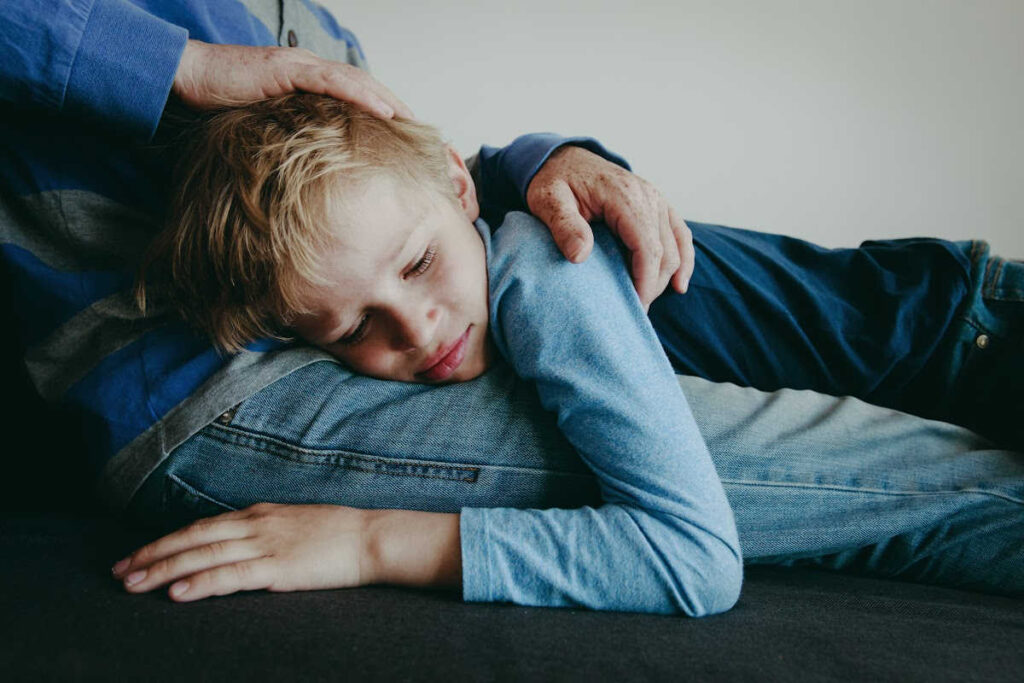
Many children experience feelings of anxiety when they are apart from a loved one or primary caregiver. This usually occurs around 10 months of age when children are beginning to explore their surroundings and require the comfort of a familiar figure. Separation anxiety however, is a term also used to describe difficulties children experience when they get older and fear being without their parents.
Parents of school-aged children have most likely experienced some mild forms of separation anxiety when dropping their children at school for the first time, or at the start of a new year or term. For younger children who are starting school for the first time, separation anxiety is most often related to uncertainty about what their day will entail, as well as changes in routine and worry about missing parents and family members. Providing your young child with information about school to prepare them, in a form they can understand and refer back to, can be beneficial. If they have never visited the school before, then making an appointment to look around can be helpful. Explaining to them what happens at school, in picture format (i.e. a story book or visual schedule with pictures depicting what will occur throughout the day) can be extremely useful. Once children have started school, collating photos of them getting ready and engaging in different activities at school which they enjoy (teachers can help with this during the day) into a book format can be a nice way to remind them each night and/or morning that they enjoy school once they are there. Simple reassurance that you will be there to pick them up at the end of the day can also go a long way towards them feeling more secure.
Older Children
Older children who tend to become worried or upset towards the end of a holiday break are often sad about being away from family after spending time with them during the holidays, however, they tend to settle into school quite easily once they start back in the daily routine. Talking to your child about the positive aspects of school (this will vary depending on their interests, but are usually related to specialist classes and seeing friends) can help them focus on the positive rather than the negatives of returning to school. If they have had something exciting happen during the holidays, then being able to share this with classmates can also be a motivator.
FOMO
Another trigger for separation anxiety often expressed by children is concern about missing out on something fun or important while they are at school. This is especially true for children who have younger siblings staying at home. If this is the case for your child, reminding them that there is not always a lot to do at home can be helpful. As with all strategies, focusing on the positive side of what they achieve by attending school (i.e. having fun with friends, learning new skills that they can teach their younger siblings) is the best way to encourage your child to look forward to school and reduce their anxiety.
Validate their concerns
While it can be tempting to dismiss or make light of a child’s anxiety in relation to school or being away from parents so as not to give it too much attention, it is extremely important that the child feels their concerns are valid. Rather than brushing off their worries, take the time to sit down and listen to them and validate their concerns, no matter how small they are. This act alone will be helpful in reducing their anxiety.
The strategies outlined above can be useful in the early stages of mild separation anxiety and are a general guide only. If your child continues to be anxious about attending school after a few weeks, or presents with severe emotional responses in relation to attending school, it would be beneficial to seek professional assistance which can be specifically tailored to your situation and your child’s needs.
