





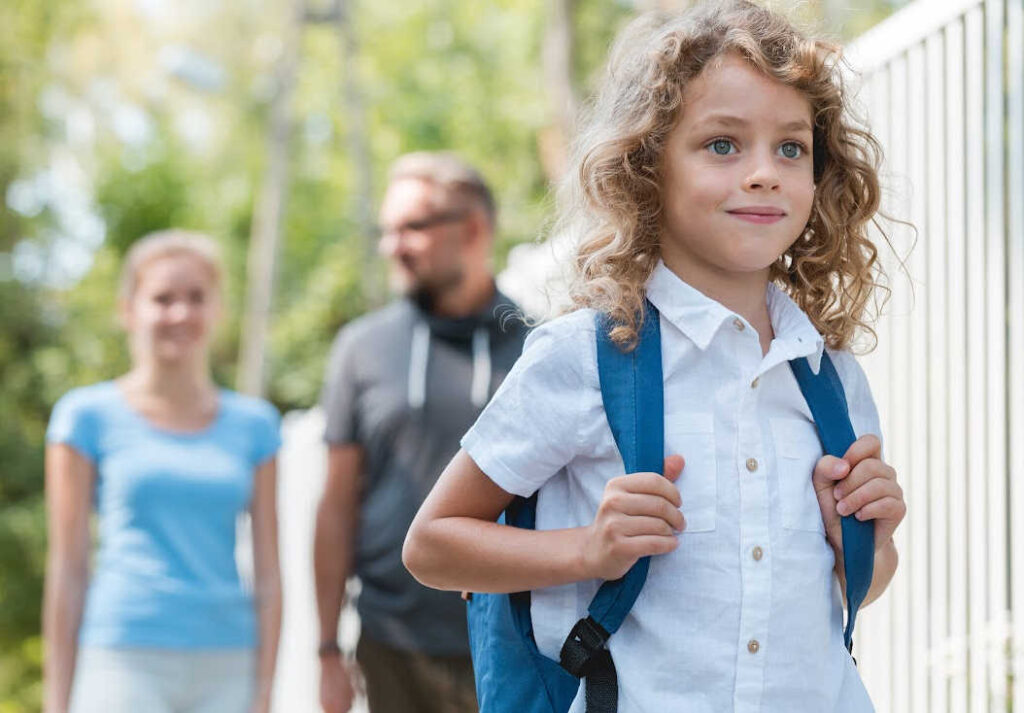
The start of school can bring up lots of emotions for children and their parents, such as: excitement, fear, sadness, worry, and curiosity.
We’ve put together some ideas to help this transition be as smooth as possible.
- Start by firstly talking about these emotions and validate what your child is feeling. A good person to discuss your emotions with is a fellow parent at kindergarten whose child is also about to start school.
- Talk positively and confidently about school and why attending is important and necessary. One way is to read a story about attending school or social stories about school. Helpful books, which are also available as a read aloud version via YouTube, include ‘The First Day’ and ‘My First Day of School’.
- Prior to attending the first day of school, practice wearing the school uniform as well as packing, and unpacking the school bag. Items to include in your child’s school bag will vary depending on the school, but what should be included is a hat, water bottle, pencils/pencil case, and a lunch box. Make sure all your child’s personal belongings are labelled with your child’s name.
- For lunch, make sure you pack familiar foods and foods that are easy for your child to open/unwrap. Use a lunchbox that your child can open and close without adult support. Discuss with your child the times in the school day that they will be able to eat their snack and lunch.
- As the start of school approaches, it may be helpful to get into the school sleep routine by practicing a couple of mornings as if you were going to school.
- Arriving early on the first day is recommended to allow your child additional time to transition into the classroom.
- Discuss with your child ahead of time where they will be dropped off and picked up. You may also like to let your child know who will be dropping them off and picking them up. Where possible, try and keep this consistent.
- If your child is going to attend before or after school care, ensure the school offers this service, your child is familiar with its location and when/which days they will be attending. Discuss with the school if you will need this service in the school holidays as well.
- Establish a quick and confident goodbye routine (i.e., a hug, a kiss and wave). The aim is to support your child to feel confident that school is a safe and trusted place.
- If your child has additional support or learning needs, it is recommended that a meeting or phone call is organised to discuss the specific and individual needs of your child with their new teacher and/or wellbeing team.
- Beginning school can lead to children tiring more easily due to the change in routine, expectations, and separation from their parents. It may be worthwhile considering fewer extracurricular activities (i.e., swimming, dance, sport) in the initial weeks of starting school until they have adjusted to their new school routine.
- At the end of the school day, try and set aside some time to talk about your child’s day. It may be helpful to have this discussion in the car on the way home, as your child may feel more comfortable to engage in the conversation away from teachers and classmates. However, your child also may need some time to process their day and have some downtime before being ready or able to have this conversation; so, it may also be better taking place later in the afternoon/evening.
- Developing relationships with other parents, particularly parents of your child’s new friends, will be helpful, especially when organising playdates outside of school.
While the start of school can be a nervous time for children (and their parents!), it is also an exciting milestone. Encourage your child to enjoy this time and talk about all of the wonderful things that will be doing and learning. Most of all, encourage them to have fun!