




We all feel angry sometimes, and it’s one of the emotions parents worry about the most. Many families we work with come in feeling unsure or overwhelmed when their child’s anger feels hard to manage, and it can feel especially confusing when anger seems to come out of nowhere.
Anger is a human emotion, and for children, it can often be a sign that something feels too much or too hard to put into words. Learning to regulate anger isn’t about getting rid of it, it’s about helping children feel understood and supported to manage what’s happening for them.
In this article, we’ll explore how children experience anger, and how parents can respond in ways that help with regulation, rather than escalate the moment.
Seeing anger as a bell curve
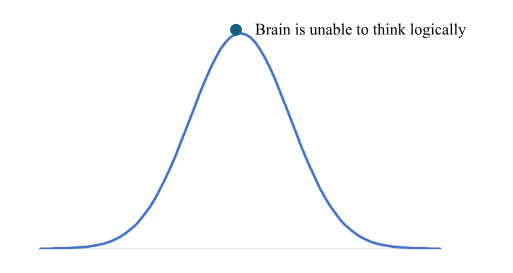
It can be helpful to think of anger as a bell curve that rises and falls over time.
As anger builds, a child’s emotions become stronger and harder to manage. At the peak of the curve, anger is at its highest. At this point, the areas of the brain responsible for thinking, problem-solving, and reasoning turn off. This means a child is not able to think logically or find solutions.
Understanding anger in this way helps explain why calm support works better than reasoning when emotions are high, and why problem-solving is more helpful once feelings have settled.
How do we respond to anger helpfully?
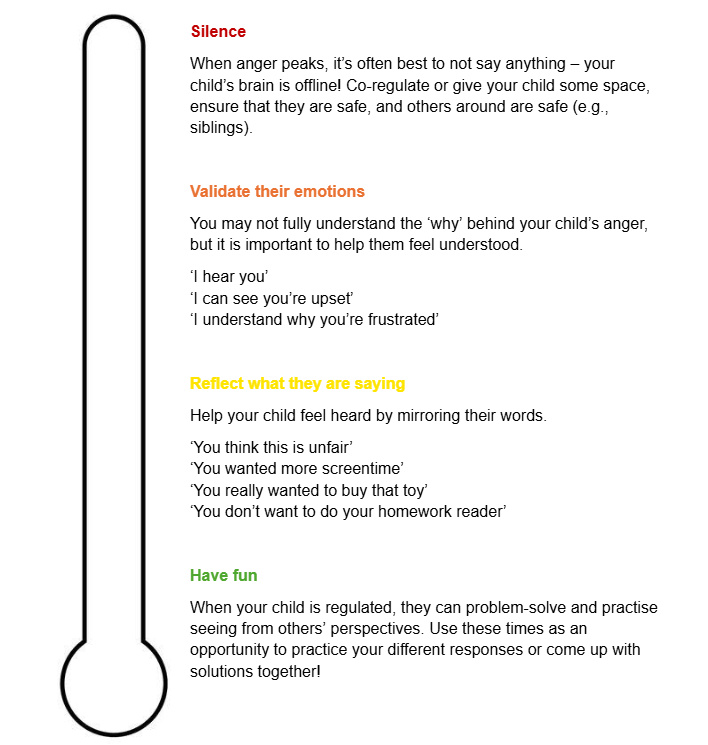
Different levels of anger require different types of responses to meet your child where they’re at.
The role of co-regulation at the peak of anger
Self-regulation is our ability to manage our emotions and behaviours and it’s a skill that develops gradually over time. Children aren’t born with the skill to calm themselves when their feelings escalate. They learn to self-regulate through their caregivers, and need support before they can do this on their own. This is where co-regulation becomes important.
Co-regulation is when a child uses the calm, steady presence of an adult to help their body settle. In other words, children learn to calm themselves by first being calmed by someone else.
When anger is at its peak, a child’s brain is not ready to talk, reason, or problem-solve. At these high levels of anger, co-regulation often means doing less:
- Staying nearby while allowing your child to have some physical or emotional space
- Keeping your voice calm and low
- Using fewer words, or none at all
Your calm presence helps your child’s nervous system feel safe enough to settle. Once anger begins to come down, the brain becomes more available for connection, reflection, and learning.
Authored by: Melody Ooi, Psychologist
Melody joined the Step by Step Psychology team as a Psychologist in 2024. Melody works therapeutically with children, adolescents, and adults from various backgrounds and with a range of concerns. In particular, she has an interest in supporting neurodivergent client populations through a neuro-affirming and gender- affirming lens, and works with clients to help them develop lifelong skills.